
B2B advertising on Facebook works because 78% of business decision-makers use the platform daily, and its granular targeting lets you reach specific job titles, company sizes, and industries with precision your competitors likely haven’t mastered. The catch: B2B sales cycles are longer, so your strategy needs to nurture leads through multiple touchpoints rather than chasing immediate conversions.
Facebook’s ad platform gives B2B marketers three advantages that LinkedIn can’t match at the same price point: lower cost-per-click (averaging $1.72 versus LinkedIn’s $5.26 in 2026), better retargeting capabilities through Pixel tracking, and creative formats that break through the professional noise. A healthcare SaaS company we analyzed spent $8,000 on Facebook ads and generated 147 qualified demo requests, compared to 41 from the same budget on LinkedIn.
The real challenge isn’t whether Facebook works for B2B (it does), but whether you can set it up correctly. You need a documented sales funnel, content for each stage, and tracking systems that attribute leads to specific ad campaigns. Most B2B advertisers waste budget on awareness campaigns without middle-funnel content to capture interest, or they target too broadly and pay to reach consumers instead of business buyers.
This guide walks you through the complete setup process: from audience building and creative development to conversion tracking and lead qualification. You’ll learn which targeting parameters actually work for professional services, franchises, and B2B healthcare, plus how to verify that your campaigns are generating revenue, not just clicks.
What You Need Before Starting Your B2B Facebook Campaign

Before launching a B2B Facebook campaign, you need specific infrastructure in place. Missing even one component can derail your efforts or waste budget on untrackable results.
Start with Facebook Business Manager, the command center for all business advertising activity. Your personal Facebook account can’t run professional campaigns at scale. Business Manager separates your personal profile from your company’s advertising operations, allows multiple team members controlled access, and houses all your ad accounts, pages, and tracking pixels in one dashboard. Set this up first, then create or claim your company’s Facebook Page within it.
Next, install the Facebook Pixel on your website. This tracking code captures visitor behavior and fires conversion events when prospects take valuable actions like form submissions or content downloads. Without proper Facebook conversion tracking setup you can’t measure ROI or optimize campaigns effectively. For B2B campaigns with longer sales cycles, pixel data becomes critical for building retargeting audiences of engaged prospects who didn’t convert immediately.
You’ll need these materials ready before campaign launch:
- Business Manager account with admin access and linked ad account
- Facebook Pixel installed and firing standard events (PageView, Lead, CompleteRegistration)
- CRM or email list with at least 1,000 contacts for Custom Audiences
- Professional ad creative (images, video, copy) tailored to business decision-makers
- Landing pages or lead forms optimized for B2B conversion with clear value propositions
- Monthly advertising budget of at least $2,000 for meaningful B2B testing
- Payment method added to your ad account
Your audience data determines targeting precision. Export your CRM contacts to create Custom Audiences of existing customers and engaged prospects. Facebook matches email addresses and phone numbers to user profiles, letting you target people already in your sales funnel or build Lookalike Audiences of similar professionals.
Budget allocation matters more in B2B than consumer campaigns. B2B audiences are smaller and cost per result runs higher because you’re reaching decision-makers with purchasing authority. Plan for $2,000 to $5,000 monthly minimum to gather statistically significant data and optimize performance. Attempting B2B Facebook campaigns with $500 monthly budgets typically produces inconclusive results that can’t guide strategic decisions.
Critical Warnings and Common Pitfalls to Avoid
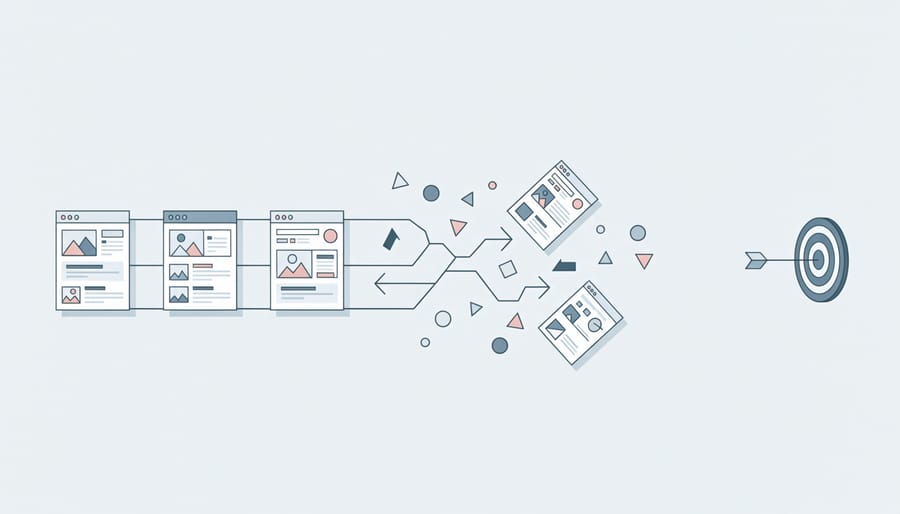
Before you launch your first B2B Facebook campaign, understand that business advertising on this platform requires significantly different safeguards than consumer marketing. The mistakes that merely waste a few dollars in B2C contexts can burn through thousands in B2B budgets within hours, and some missteps can create legal or reputational damage that far exceeds your ad spend.
Stop your campaign immediately if your cost per lead exceeds three times your target within the first 48 hours. This signals a fundamental targeting or creative mismatch that won’t improve with scale. Many B2B advertisers mistakenly assume Facebook needs weeks to optimize, but if your initial results show $300 leads when you budgeted for $100, the algorithm is telling you something’s wrong with your setup, not that it needs more time.
Compliance violations carry especially severe consequences for legal and healthcare advertisers. Never use targeting based on sensitive health conditions, even if Facebook’s interface allows it. Healthcare practices must avoid any language that implies guaranteed outcomes or makes claims the practice can’t substantiate with documentation. Law firms face similar restrictions: advertising specific case results without appropriate disclaimers violates bar association rules in most states, and Facebook’s permanent ad archive means these violations remain publicly visible indefinitely.
Pause and reassess if you’re seeing high click-through rates but zero conversions. This pattern typically indicates your ad creative attracts clicks from non-decision-makers (curious employees, students, job seekers) rather than qualified prospects. You’re paying for worthless traffic that inflates your costs without producing leads.
Data privacy requires particular attention when uploading customer lists for Custom Audiences. Ensure you have explicit consent to use contact information for advertising purposes, especially for healthcare providers subject to HIPAA. A single complaint about unauthorized use of patient data can trigger regulatory investigations that dwarf your advertising investment.
Step-by-Step: Setting Up Your B2B Facebook Advertising Campaign
Step 1: Define Your B2B Campaign Objective and Funnel Stage
B2B buying cycles typically span weeks or months, not minutes. Your Facebook campaign objective must reflect where prospects are in this journey.
For top-of-funnel awareness, use the Awareness objective when targeting cold audiences who don’t know your firm yet. This works well for thought leadership content, industry reports, or brand-building campaigns that establish credibility before asking for contact information.
At the consideration stage, the Traffic objective drives prospects to valuable content like case studies, webinars, or educational resources. This nurtures interest without forcing immediate commitment. For legal and healthcare firms building trust, this middle stage proves essential.
For bottom-of-funnel conversion, the Leads objective captures direct inquiries through Facebook’s native lead forms. Use this for demo requests, consultation bookings, or quote requests when prospects are ready to engage. The Conversions objective works better when you need leads to complete actions on your website, such as detailed contact forms that require more qualification fields than Facebook’s native forms allow.
Match your objective to realistic expectations. A prospect discovering your restaurant franchise opportunity won’t request a franchise packet immediately; they need educational content first.
Step 2: Build Your B2B Audience with Precision Targeting
Audience building for B2B Facebook campaigns requires a fundamentally different approach than consumer targeting. You’re not reaching everyone in a demographic group, you’re identifying specific professionals who make purchasing decisions for businesses in your target industries.
Start with Facebook’s job title targeting to reach decision-makers. For legal services, target titles like “managing partner,” “legal administrator,” or “office manager” at law firms. Healthcare campaigns should focus on “practice manager,” “medical director,” or “healthcare administrator.” Franchise prospects respond to “franchise owner,” “multi-unit operator,” or “business development manager,” while restaurant campaigns target “restaurant owner,” “general manager,” or “director of operations.”
Layer industry parameters on top of job titles to narrow your reach. Facebook’s detailed targeting allows you to specify “legal services,” “healthcare,” “franchise business,” or “food service” industries, filtering out professionals with similar titles in unrelated fields.
Company size targeting matters significantly for B2B. A solo practitioner has different needs than a 50-attorney firm. Use employer size filters to match your service offering, small businesses (1-10 employees), mid-market (11-200), or enterprise (200+).
Build your targeting foundation by following this sequence:
- Select your primary industry category from Facebook’s detailed targeting options
- Add relevant job titles that indicate purchasing authority in that industry
- Filter by company size ranges that match your ideal client profile
- Layer additional behaviors like “business decision-makers” or “engaged shoppers”
- Exclude competitors and current clients to focus budget on new prospects
Custom Audiences from your CRM data create your highest-value targeting option. Upload email lists of past clients, event attendees, or webinar registrants to build warm audiences who already know your brand. These contacts convert at substantially higher rates than cold prospects.
Lookalike Audiences expand your reach by finding Facebook users who match your best customers’ characteristics. Create a source audience from your top 500-1,000 clients, then let Facebook identify similar professionals. Start with a 1% lookalike for maximum similarity, then test broader 2-3% audiences once you validate performance.
Step 3: Set Budgets and Bidding Strategies for B2B
B2B budget allocation on Facebook requires a different mindset than consumer campaigns. A qualified lead for a law firm or healthcare facility might be worth $500 to $5,000 in lifetime value, which changes how you evaluate performance metrics.
Start with a daily budget of $50, $100 per ad set during testing. This gives Facebook’s algorithm enough data to optimize without burning through funds before you identify what works. For B2B audiences, expect cost-per-lead ranges of $30, $150 depending on your industry and targeting specificity. Healthcare and legal sectors typically see higher costs due to regulatory constraints and competitive bidding, while franchise leads often fall in the middle range.
Use lowest cost bidding initially to establish baseline performance. Once you identify your target cost per qualified lead, switch to cost cap bidding to maintain profitability at scale. Daily budgets work better for ongoing lead generation, while lifetime budgets suit time-bound campaigns like webinar promotions.
Allocate at least 70% of your budget to proven audiences and creative, reserving 30% for testing new approaches. Scale winning ad sets by increasing budgets no more than 20% every three days to avoid disrupting the algorithm’s learning phase.
Step 4: Create Professional Ad Creative That Resonates with Business Buyers
Your creative must solve a business problem immediately and credibly. Business buyers scroll Facebook expecting personal content, so you have seconds to signal relevance and value without sounding like consumer fluff.
Start your ad copy with the core business outcome, not generic setup. “Reduce client acquisition costs by 40%” lands harder than “Looking to grow your legal practice?” Lead with the measurable benefit, then explain how briefly. Keep copy concise, three to four lines maximum before the call-to-action. Decision-makers skim; buried value gets ignored.
For imagery, avoid stock photos of handshakes and conference rooms. Use clean data visualizations, before-and-after dashboards, or simple product screenshots that demonstrate your solution. Healthcare practices respond well to charts showing patient volume increases. Franchise owners want territory performance comparisons. Restaurant managers need visual proof of reservation growth or cost savings. Show tangible results, not abstract concepts.
Video outperforms static images for B2B when you demonstrate rather than describe. A 15-second screen recording showing how your platform simplifies compliance tracking works better than a talking-head explanation. Keep videos under 30 seconds and ensure the core message is clear without sound.
Build credibility with specific social proof. “Helped 47 personal injury firms generate 200+ qualified cases” beats “Trusted by law firms nationwide.” Include recognizable client logos if permitted, or cite concrete results from your sector. Review successful Facebook ad examples in your industry to identify proven creative patterns.
Your call-to-action must match the buyer’s stage. Early-stage awareness campaigns work with “Download the benchmark report.” Consideration-stage ads should offer “Schedule a 15-minute strategy review.” Never use vague CTAs like “Learn more”, business buyers need to know exactly what happens when they click.
Step 5: Configure Lead Forms or Landing Pages
Choose between Facebook Lead Ads and external landing pages based on your sales process complexity and CRM capabilities. Lead Ads work best for simple inquiries where you need contact details quickly, webinar signups, consultation requests, or content downloads. External landing pages give you more control over messaging, allow longer qualification forms, and integrate more seamlessly with marketing automation platforms.
For Lead Ads setup, navigate to your ad set and select “Instant Forms” as your conversion location. Create a new form with a professional header image that reinforces your business credibility. The introduction should clearly state what the prospect receives and how their information will be used, essential for B2B trust.
Add qualification questions beyond basic contact fields. Include company size, current challenges, timeline to purchase, or budget range. Healthcare and legal firms should add compliance disclaimers about HIPAA or confidentiality. Keep forms to six fields maximum; longer forms dramatically reduce completion rates even in B2B contexts.
Connect your CRM integration under “Advanced Options” to automatically route leads. Test the form submission yourself before launching to verify data flows correctly and auto-response emails deploy properly.
How to Verify Your Campaign Is Working and Optimize Performance

Once your B2B Facebook campaign launches, tracking the right metrics separates productive campaigns from budget drains. Quality matters more than volume in B2B contexts, where a single qualified lead might be worth hundreds or thousands of dollars.
Start by monitoring your cost per lead (CPL) against industry benchmarks. B2B audiences on Facebook typically cost $30, $150 per lead depending on your sector and targeting specificity. Healthcare and legal campaigns often run higher due to compliance requirements and smaller addressable audiences, while franchise and restaurant campaigns may achieve lower CPLs with broader targeting. If your CPL exceeds your lead value threshold within the first week, pause and reassess your targeting or creative before spending further.
Lead quality scores matter more than raw lead counts. Review every form submission or landing page conversion within your first 48 hours. Create a simple scoring system: qualified (matches buyer persona and shows genuine interest), unqualified (wrong job title, industry, or budget), or spam (fake contact info). If less than 60% of your leads score as qualified, your targeting needs refinement or your offer isn’t attracting the right decision-makers.
Connect Facebook’s Conversions API to your CRM immediately. This integration tracks which leads progress through your sales funnel, revealing true ROI beyond the initial conversion. A campaign generating 50 leads at $40 each looks expensive until your CRM shows 10 became customers worth $5,000 each. Without this connection, you’re optimizing blind.
Check your frequency metric daily during the first two weeks. Frequency above 3.0 means you’re showing the same ads to the same people repeatedly, signaling audience exhaustion. Expand your targeting parameters or refresh your creative when frequency climbs.
Run A/B tests on one variable at a time. Test audience segments against each other for three days with identical creative, then test headline variations against your winning audience for another three days. Changing multiple elements simultaneously makes it impossible to identify what’s working.
Review performance at the ad set level, not just campaign level. One audience segment might deliver qualified leads at $35 while another in the same campaign costs $120. Shift budget toward winning segments after gathering at least 30 conversions per ad set, earlier decisions often reflect statistical noise rather than true performance patterns.
Advanced B2B Techniques to Scale Results

Once your initial B2B Facebook campaigns consistently generate qualified leads at an acceptable cost, you’re ready to implement advanced techniques that amplify results and extract maximum value from your investment.
Retargeting sequences designed for B2B buying cycles deliver the highest ROI improvements. Create audience segments based on engagement depth, those who watched 75% of your video, visited pricing pages, or downloaded multiple resources, then serve progressively specific content over weeks or months. A legal firm might retarget webinar attendees with case studies, then testimonials, then consultation offers across a 60-day window, matching the typical decision timeline for professional services.
Multi-touchpoint attribution becomes critical as you scale. Connect Facebook’s conversion API with your CRM to track which touchpoints contribute to closed deals, not just form submissions. This visibility reveals whether Facebook initiates relationships that close through other channels, justifying continued investment even when last-click attribution appears weak.
Content marketing integration through blog promotions and gated resources builds authority while capturing intent signals. Promote high-value content to cold audiences, then retarget engaged readers with commercial offers. A healthcare technology company might promote a compliance guide, then target downloaders with product demos.
Video remarketing sequences nurture prospects efficiently. Create a series addressing common objections or questions, serving each video to those who watched the previous one. This automated nurture path maintains visibility throughout extended consideration periods without constant manual campaign adjustments.
Account-based marketing tactics using Facebook’s company targeting options let you focus budgets on specific organizations. Upload target account lists, create Lookalike Audiences from your best customers, or layer job title targeting within specific company size and industry parameters to reach decision-makers at your ideal prospects.
Frequently Asked Questions About B2B Facebook Advertising
Is Facebook really effective for B2B lead generation, or just B2C?
Facebook works for B2B when you target decision-makers with professional messaging and accept longer conversion timelines. Business buyers use Facebook daily, making it a viable channel for reaching them outside traditional LinkedIn environments, especially when combined with precise job title and industry targeting.
What should I expect to pay per B2B lead on Facebook?
B2B lead costs typically range from $50 to $200+ depending on your industry, audience specificity, and lead qualification level. Legal and healthcare sectors often see higher costs due to stricter targeting and compliance requirements, while franchise and restaurant leads may fall in the lower-to-mid range with broader targeting.
How long does it take to see results from B2B Facebook campaigns?
Expect 30 to 90 days to gather meaningful data and optimize performance. B2B sales cycles are longer than consumer purchases, so initial leads may take weeks or months to convert into clients, making transparent reporting and patient optimization essential for accurate ROI assessment.
Should I use Facebook instead of Google Ads for B2B marketing?
Use both channels for different purposes rather than choosing one over the other. Facebook excels at building awareness and nurturing prospects through the consideration phase, while search engine marketing captures high-intent buyers actively searching for solutions, and understanding the organic vs paid dynamics helps allocate budget effectively across channels.
Can I target specific companies or just job titles and industries?
Facebook does not offer the same account-based targeting as LinkedIn, but you can upload customer email lists to create Custom Audiences and build Lookalike Audiences from your best clients. This approach works particularly well for multi-location businesses like franchises and restaurant groups where local Facebook ads can target decision-makers within specific geographic markets.
Are there compliance issues I need to worry about for legal or healthcare B2B ads?
Yes, both sectors face strict advertising regulations that apply to Facebook campaigns. Legal services must avoid guarantees and misleading claims, while healthcare advertisers need HIPAA-compliant data handling and careful messaging around medical services, making professional review of ad copy and landing pages non-negotiable before launch.
These questions reflect the real concerns business owners face when evaluating Facebook as a B2B channel. The hesitation often stems from Facebook’s consumer-focused reputation, but the platform’s massive reach means your target decision-makers are there, they just need different messaging and targeting than consumer audiences require.
Facebook remains a powerful B2B lead generation channel when you apply the specialized techniques outlined in this guide. The key difference between success and wasted budget lies in your approach: treating B2B campaigns as strategic initiatives rather than consumer marketing tactics.
Start with a focused test campaign targeting a single audience segment with a clear offer. Allocate enough budget to gather meaningful data (typically $2,000-3,000 over 30 days), and commit to monitoring performance weekly. The metrics will tell you what’s working and where to adjust.
Data-driven optimization separates profitable campaigns from costly experiments. Track not just lead volume but lead quality, conversion rates through your sales funnel, and actual revenue attribution. Transparent reporting connects Facebook performance to business outcomes, allowing you to make informed scaling decisions.
For legal practices, healthcare providers, franchises, and restaurants, the targeting precision and creative flexibility Facebook offers can deliver qualified decision-makers at predictable costs. The platform works when you implement it correctly.
If you need expert guidance setting up or optimizing your B2B Facebook campaigns, we specialize in creating data-driven strategies for professional service businesses. Let’s discuss how Facebook advertising can work for your specific business goals.