
Blog promotions drive measurable traffic growth by strategically distributing your content across multiple channels where your target audience already spends time. The most effective approach combines social media amplification, email marketing, and search engine marketing to create sustained visibility for every post you publish.
Most business owners publish quality content and expect readers to find it organically. That approach leaves results to chance. Systematic promotion turns each blog post into a traffic asset that continues delivering leads months after publication. For legal practices, healthcare providers, franchises, and restaurants competing in local markets, this difference directly impacts client acquisition costs and conversion rates.
The challenge isn’t creating more content. You need a repeatable process that amplifies reach without consuming excessive time or budget. This means identifying which platforms your prospects actually use, tailoring your message for each channel, and measuring what drives real business outcomes rather than vanity metrics.
Effective blog promotions in 2026 require understanding platform algorithms, timing distribution for maximum engagement, and optimizing based on performance data. When executed correctly, promotion efforts typically generate three to five times more traffic than organic discovery alone. The strategy works because it meets potential clients where they already consume information, rather than waiting for them to stumble across your website.
This guide provides the specific tactics, measurement frameworks, and optimization strategies you need to make blog promotions a predictable growth channel for your business.
Why Blog Promotions Are Essential for Your Business in 2026
Publishing quality blog content represents only half the equation for business growth. Without strategic blog promotions, even the most valuable articles remain invisible to potential customers who could benefit from your expertise.
The difference between businesses that generate consistent traffic and leads from their blogs versus those that see minimal results comes down to promotion strategy. A well-promoted blog post can drive hundreds or thousands of targeted visitors to your website, while an unpromoted post typically attracts fewer than 30 readers in its first month, regardless of quality.
Blog promotions deliver measurable business value across multiple dimensions:
- Increased website traffic: Strategic promotion expands your content’s reach beyond your existing audience, attracting new visitors who match your customer profile
- Lead generation opportunities: Each promoted post creates multiple touchpoints where prospects can enter your sales funnel through content offers, newsletter signups, or consultation requests
- Enhanced brand authority: Consistent promotion positions your business as an industry thought leader, particularly valuable for legal and healthcare professionals establishing credibility
- Improved conversion rates: Promoted content reaches prospects at different stages of the buying journey, nurturing them toward conversion decisions
- Extended content lifespan: Promotion campaigns give valuable posts multiple exposure cycles rather than a single publication spike
The competitive landscape in 2026 makes promotion essential rather than optional. Your potential customers encounter hundreds of content pieces daily across social media platforms. Without deliberate promotional effort, your blog content disappears into this noise, delivering minimal return on your content creation investment.
Data consistently shows that businesses dedicating resources to systematic blog promotion achieve 3-5 times higher traffic and lead generation compared to those relying solely on organic discovery. The promotion strategy you choose determines whether your content investment generates measurable ROI or simply occupies server space.
Strategic promotion transforms blog content from a cost center into a revenue driver, creating measurable paths from content consumption to customer acquisition.
Building Your Blog Promotion Foundation
Identifying Your Target Audience on Social Platforms
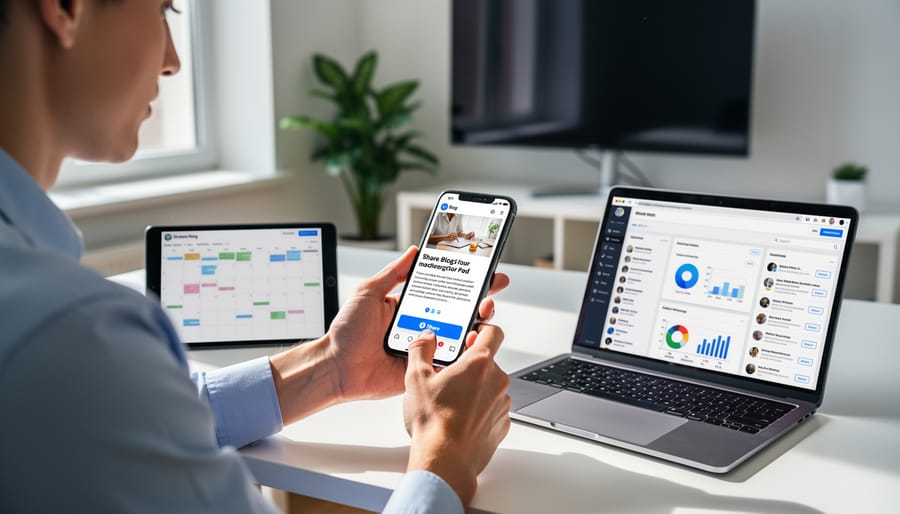
Before you invest time and budget into blog promotions, you need to know where your audience actually spends their time online. This isn’t guesswork, it’s strategic research that prevents wasted effort on platforms your prospects ignore.
Start with demographic data specific to your industry. Americans’ social media use varies significantly by age, education level, and professional context. For legal and healthcare professionals, LinkedIn dominates because it’s where they consume professional content during work hours. Your potential clients in these sectors are decision-makers who rarely scroll Facebook for business solutions but regularly check LinkedIn for industry insights.
Franchise owners and restaurant operators show different patterns. They’re active on Facebook and Instagram, platforms where visual content performs well and community engagement happens naturally. These business owners follow industry groups, competitor pages, and local community accounts, all opportunities for your promoted blog content to appear.
Test your assumptions with direct evidence. Check your existing website analytics to see which social platforms currently send traffic. Survey your current clients about their preferred platforms. Monitor where your competitors’ content gets engagement. If you’re promoting blog posts about franchise marketing strategies on TikTok while your audience lives on LinkedIn, you’re burning resources.
Platform selection directly impacts your promotion ROI. Knowing where your audience congregates means you can concentrate your efforts, create platform-appropriate content formats, and allocate promotional budgets to channels that actually deliver traffic and conversions.
Setting Measurable Goals for Blog Promotions
Effective blog promotions require concrete targets that connect social media activity to business outcomes. Without measurable goals, you’re guessing whether your promotional efforts justify the time and budget invested.
Start with traffic objectives. Set specific targets for how many visitors each promoted blog post should generate within the first week, month, and quarter. For example: 500 visitors in week one, 1,200 total in month one. These numbers should reflect your current baseline and desired growth trajectory.
Define engagement benchmarks for each platform. Track social shares, comments, and click-through rates from promotional posts. A realistic initial target might be a 2-3% click-through rate from Facebook posts or 5-7% from LinkedIn, depending on your audience and content quality.
Most critically, establish conversion metrics. Determine what actions constitute success beyond traffic, newsletter signups, contact form submissions, consultation requests, or direct purchases. If you’re promoting a blog post about legal services, your goal might be three qualified consultation requests per 1,000 visitors.
Document these targets in a simple tracking spreadsheet with weekly review points. This creates accountability and provides the data needed to refine your promotion strategy. Clear KPIs transform blog promotion from a vague marketing activity into a measurable driver of business growth.
Social Media Platforms for Blog Promotions: Choosing the Right Channels
Facebook for Business Blog Promotions

Facebook remains one of the most effective channels for business blog promotions in 2026, particularly for healthcare providers, legal practices, and franchise operations seeking to reach local audiences. The platform’s 2.9 billion active users provide substantial reach, while its targeting capabilities allow precise audience segmentation by profession, interests, and geographic location.
For organic blog promotion, post your content during peak engagement windows, typically weekday mornings between 9-11 AM when professionals check feeds. Include a compelling excerpt in your post text rather than generic “read more” language. A healthcare practice might write “Three patient questions we answer daily about insurance coverage” rather than “New blog post about billing.” Add native video snippets or custom graphics to increase organic reach, as Facebook’s algorithm currently prioritizes visual content over link-only posts.
Facebook advertising integration transforms blog promotion from hopeful posting to measurable lead generation. Boosted posts work well for time-sensitive content, while conversion campaigns optimize for specific actions like newsletter signups or consultation requests. Budget $50-100 per promoted blog post initially, targeting audiences within 25 miles of your location for service-based businesses.
Audience targeting delivers the real advantage. Create custom audiences from website visitors who’ve read similar blog content, then exclude existing clients to focus on prospects. Layer demographic filters, target parents aged 30-45 for pediatric practices, or business owners for franchise opportunities. Lookalike audiences expand reach by finding users similar to your existing customers, increasing conversion probability while maintaining cost efficiency.
Test different post formats systematically, measure click-through rates and conversion data weekly, then allocate budget toward top performers.
LinkedIn for Professional and B2B Blog Content
LinkedIn stands apart as the premier platform for professional and B2B blog promotions, particularly for legal and healthcare industries where credibility and expertise drive client decisions. With 930 million professionals actively seeking industry insights, LinkedIn delivers higher engagement rates for thought leadership content compared to other social networks.
For organic blog promotion, publish native posts that tease your blog’s key insight rather than simply sharing a link. Articles demonstrating specialized expertise, such as regulatory updates in healthcare compliance or case law implications in legal practice, perform exceptionally well. Tag relevant connections, use three to five industry-specific hashtags, and engage with comments within the first two hours to maximize algorithmic reach. LinkedIn’s publishing platform also allows you to repurpose blog content directly on the network, establishing author authority while driving traffic back to your site.
LinkedIn’s paid promotion options offer precise targeting by job title, company size, industry, and seniority level. Sponsored content campaigns promoting blog posts typically achieve click-through rates of 0.5-2% when targeting decision-makers in franchise management or healthcare administration. Start with $10-15 daily budgets to test messaging, then scale campaigns that generate traffic at acceptable cost-per-click rates. Track LinkedIn-specific conversions in your analytics to measure ROI accurately and adjust targeting parameters based on performance data.
Platform Selection Strategy for Your Industry
Your platform choice should align with where your clients actively seek information, not where you prefer to spend time. Legal practices see strongest engagement on LinkedIn, where decision-makers research attorneys and consume thought leadership content during business hours. Healthcare providers typically split focus between Facebook for community connection and Instagram for visual storytelling, though LinkedIn works well for B2B healthcare services targeting referring physicians or practice administrators.
Franchise businesses benefit from Facebook’s local targeting capabilities and community-building features, while restaurant promotions perform best on Instagram and Facebook, where food photography drives immediate interest and sharing. Start with one primary platform that matches your industry profile, master its promotion rhythm, then add a secondary channel only after establishing consistent results. Track which platform delivers qualified traffic that converts, not just vanity metrics like follower counts, and allocate your limited promotion time accordingly. A mediocre presence on four platforms underperforms a strategic, data-informed approach on two.
Effective Blog Promotion Tactics on Social Media
Crafting Compelling Social Media Posts for Blog Content
Your social media post serves as the gateway between scrolling and clicking, make it count. Start with a hook that directly addresses a pain point or promises a concrete benefit your target audience cares about. For a legal practice, that might be “3 contract clauses that protect your business from liability disputes” rather than a generic “New blog post about contracts.” Lead with the value, not the announcement.
Keep your copy conversational and scannable. Write like you’re explaining the post’s benefit to a colleague, not composing a press release. Use line breaks to create visual breathing room, and front-load the most compelling information in the first sentence since many platforms truncate longer posts. Include one clear call-to-action that tells readers exactly what to do: “Read the full breakdown” or “Get the checklist” works better than vague phrases like “Learn more.”
Visuals dramatically increase engagement and click-through rates. Choose images that relate directly to your blog content, if you’re writing about restaurant marketing tactics, show a busy dining room or a compelling menu board, not a stock photo of someone typing on a laptop. Custom graphics highlighting a key statistic or actionable tip from your article often outperform generic imagery because they provide immediate value while creating curiosity about the full content.
Pair your promotional posts with broader marketing strategies. Understanding how SEM works alongside organic social promotion creates multiple traffic channels that reinforce each other. Test different headline formulations, visual styles, and CTA placements, then double down on what your analytics reveal actually drives clicks and conversions from your specific audience.
Timing and Frequency: When to Promote Your Blog Posts
Timing affects blog promotion performance significantly. Research shows posting when your specific audience is active increases engagement by 30-50% compared to arbitrary scheduling. For legal and healthcare professionals, weekday mornings (8-10 AM) and lunch hours (12-1 PM) typically yield higher click-through rates. Restaurant and franchise businesses often see better results during evening hours (5-8 PM) when consumers browse dining and service options.
Start by analyzing your existing social media analytics to identify when your followers are online. Facebook Insights and LinkedIn Analytics provide hour-by-hour activity data. Test three different posting times over two weeks, tracking clicks and engagement for each window. Whichever time generates 20% more traffic becomes your primary slot.
Promotion frequency matters as much as timing. Share each blog post at least three times across the first week: immediately upon publication, three days later with different copy, and again at day seven. Avoid posting more than twice daily on any platform to prevent audience fatigue. Space promotions 4-6 hours apart when sharing multiple pieces.
Don’t set-and-forget your schedule. Review performance monthly. Audience behavior shifts with seasons, industry trends, and platform algorithm changes. What worked in January may underperform by June.
Repurposing Blog Content for Social Formats
A single blog post can fuel weeks of social media content when properly repurposed. Instead of sharing the same link repeatedly, break your article into distinct formats that extend its promotional reach.
Start with pull quotes: extract 2-3 compelling statements from your post and overlay them on branded graphics. Healthcare practices might highlight patient statistics, while restaurants can feature chef insights. These standalone visuals work well on Instagram and Facebook feeds.
Create carousel posts by converting numbered lists or process steps into swipeable slides. A franchise blog about local marketing might become a 5-slide carousel, with each slide detailing one tactic. LinkedIn favors this format for professional content.
Video snippets deliver high engagement across platforms. Record 30-second clips summarizing key points, or use screen recording tools to show data visualizations from your post. Legal firms can explain complex concepts through brief talking-head videos that link to the full article.
Infographics condense research-heavy sections into shareable visuals. If your blog post includes survey data or comparative analysis, transform those findings into a single graphic that drives traffic back to the complete content.
This multiplier approach means one blog post generates 10-15 unique social assets, maximizing your content investment while maintaining consistent promotion across channels.
Using Paid Social Advertising to Amplify Blog Promotions
Paid social advertising can rapidly scale your blog’s reach when organic distribution hits its ceiling. While organic beats paid for long-term sustainability, strategic paid campaigns deliver immediate visibility for time-sensitive content or when launching new blog initiatives.
Start with modest budgets, $5-10 per day on Facebook or LinkedIn lets you test messaging and audience segments without significant financial risk. Allocate budget to your top-performing organic posts first; content that already generates engagement organically will typically deliver better paid results. Target audiences using specific parameters: job titles for B2B content (healthcare administrators, franchise owners), geographic radius for local businesses (restaurants, legal practices), and interests aligned with your blog topics.
Facebook’s detailed targeting allows you to reach business decision-makers by company size and industry, while LinkedIn’s professional filters excel for thought leadership content aimed at executives. Set clear ROI benchmarks before launching: if your average client value is $2,000 and you convert 2% of blog visitors, you can afford roughly $40 per click. Track conversions through UTM parameters to attribute leads directly to paid blog promotions, ensuring transparent reporting on campaign performance and making budget adjustments based on actual conversion data rather than vanity metrics like impressions.
Measuring and Optimizing Blog Promotion Performance

Key Metrics to Track for Blog Promotions
Tracking the right metrics transforms blog promotions from guesswork into a data-driven strategy that supports measurable business growth. Focus on metrics that directly connect promotional efforts to business objectives rather than vanity numbers that don’t indicate real performance.
- Click-Through Rate (CTR)
- The percentage of people who click your blog link after seeing your social media post. A CTR above 2% indicates strong post relevance and compelling copy, while below 1% suggests your messaging needs refinement.
- Traffic Source Performance
- Which social platforms and specific posts drive the most visitors to your blog. This metric reveals where to concentrate promotional resources and which channels underperform for your audience.
- Engagement Rate
- Likes, comments, shares, and saves your promotional posts receive relative to reach. Rates above 3-5% signal content resonance, while lower rates indicate your audience finds the promoted content less relevant.
- Conversion Rate
- The percentage of blog visitors from social promotions who complete desired actions like form submissions, consultation requests, or purchases. This metric directly ties promotional activity to revenue and lead generation goals.
- Time on Page
- How long visitors from social promotions spend reading your blog content. Sessions under 30 seconds suggest a disconnect between your promotional messaging and actual content, while 2+ minutes indicates genuine interest.
Connect each metric to specific business objectives. If you’re promoting a legal services blog to generate consultation requests, conversion rate matters more than raw traffic. Healthcare practices focused on patient education should prioritize time on page and return visitor rates. Restaurant and franchise businesses promoting limited-time offers need to track conversion speed, how quickly social visitors take action after reading.
Set up tracking parameters in Google Analytics or your analytics platform to isolate social media traffic from other sources. Use UTM parameters on links shared across different platforms and posts to identify exactly which promotional tactics work best for your industry and audience.
Using Data to Refine Your Promotion Strategy
Data reveals what’s working and what isn’t. Start by reviewing your analytics weekly to spot patterns. Compare performance across different blog topics, promotional channels, and posting times. If your Facebook posts consistently drive 40% more traffic than LinkedIn for restaurant content, allocate more resources there. When certain blog topics generate higher engagement but lower conversions, examine whether your calls-to-action match reader intent.
Create a simple spreadsheet to track promotion performance by channel. Record click-through rates, bounce rates, and time-on-page for each promotional post. This transparency shows which channels deliver quality traffic versus vanity metrics. If a platform sends thousands of clicks but visitors leave immediately, that channel wastes your budget.
Test one variable at a time. Change post copy while keeping visuals consistent, or adjust posting times while maintaining the same content format. Run A/B tests on paid promotions to identify which headlines, images, or audience segments perform best. Document your findings and apply them to future campaigns.
Look beyond immediate traffic. Some blog promotion strategies complement your organic search advantage by building long-term visibility. Track how promoted posts influence search rankings, backlinks, and brand mentions over months, not just days.
Stop promoting content that consistently underperforms after optimization attempts. Redirect those resources to high-performing topics and channels. Your data tells you exactly where to invest for maximum return.
Common Blog Promotion Mistakes to Avoid
Even well-intentioned promotional efforts fall short when businesses make preventable mistakes. Recognizing these pitfalls helps you avoid wasting time and budget on ineffective tactics.
Over-promoting without providing value ranks among the most damaging errors. If every social media post links to your blog without offering genuine insights or engagement, your audience will tune out. Balance promotional posts with educational content, industry news, and direct engagement. A typical ratio of one promotional post for every three to four value-driven posts maintains audience interest without appearing self-serving.
Ignoring engagement and treating social media as a broadcast channel severely limits your promotional impact. When followers comment on your blog posts, respond within 24 hours. Join relevant conversations, answer questions, and acknowledge shares. This two-way interaction builds relationships that amplify your content’s reach organically and signals to platform algorithms that your content deserves broader distribution.
Inconsistent posting schedules confuse your audience and diminish visibility. Algorithms favor accounts that post regularly. Establish a realistic publishing and promotion schedule you can maintain, even if that means promoting blog content twice weekly rather than daily. Consistency builds audience expectations and improves your content’s algorithmic performance over time.
Failing to track and measure results prevents meaningful improvement. Without data showing which platforms, post formats, and timing deliver the highest click-through rates, you’re guessing rather than optimizing. Set up proper tracking from the start, review metrics monthly, and adjust your approach based on evidence rather than assumptions. This measurement discipline complements your broader SEM strategy by ensuring every promotional effort contributes to measurable business outcomes.
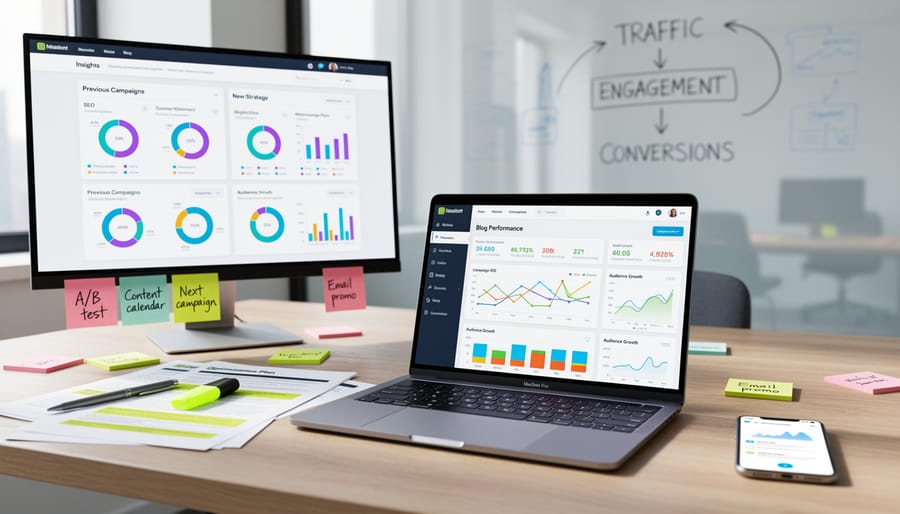
Strategic blog promotions represent one of the most controllable levers for business growth in your digital marketing arsenal. Unlike algorithms you can’t influence or search rankings that take months to materialize, promotion puts your content directly in front of your target audience when and where they’re most receptive.
The businesses seeing measurable results from blog content share three characteristics: they promote systematically rather than sporadically, they track performance against specific KPIs, and they refine their approach based on what the data reveals. This isn’t about hoping your content finds an audience. It’s about engineering visibility through deliberate channel selection, timing optimization, and continuous testing.
Your blog content already exists. The difference between content that generates leads and content that sits unread comes down to promotion execution. Start with one or two platforms where your audience demonstrates active engagement. Establish baseline metrics for traffic, engagement, and conversions. Test different post formats, timing variations, and messaging approaches. Measure what works. Double down on winning tactics and eliminate what doesn’t perform.
The framework outlined here works because it prioritizes measurable outcomes over vanity metrics. Whether you’re promoting a single high-value piece or building a systematic promotion calendar, the principles remain consistent: know your audience, choose your channels strategically, create compelling reasons to click, and let performance data guide your optimization.
Implementation separates businesses that talk about content marketing from those that generate real ROI from it.